
The Library

Stories that don’t apologize — curated fiction and community submissions.

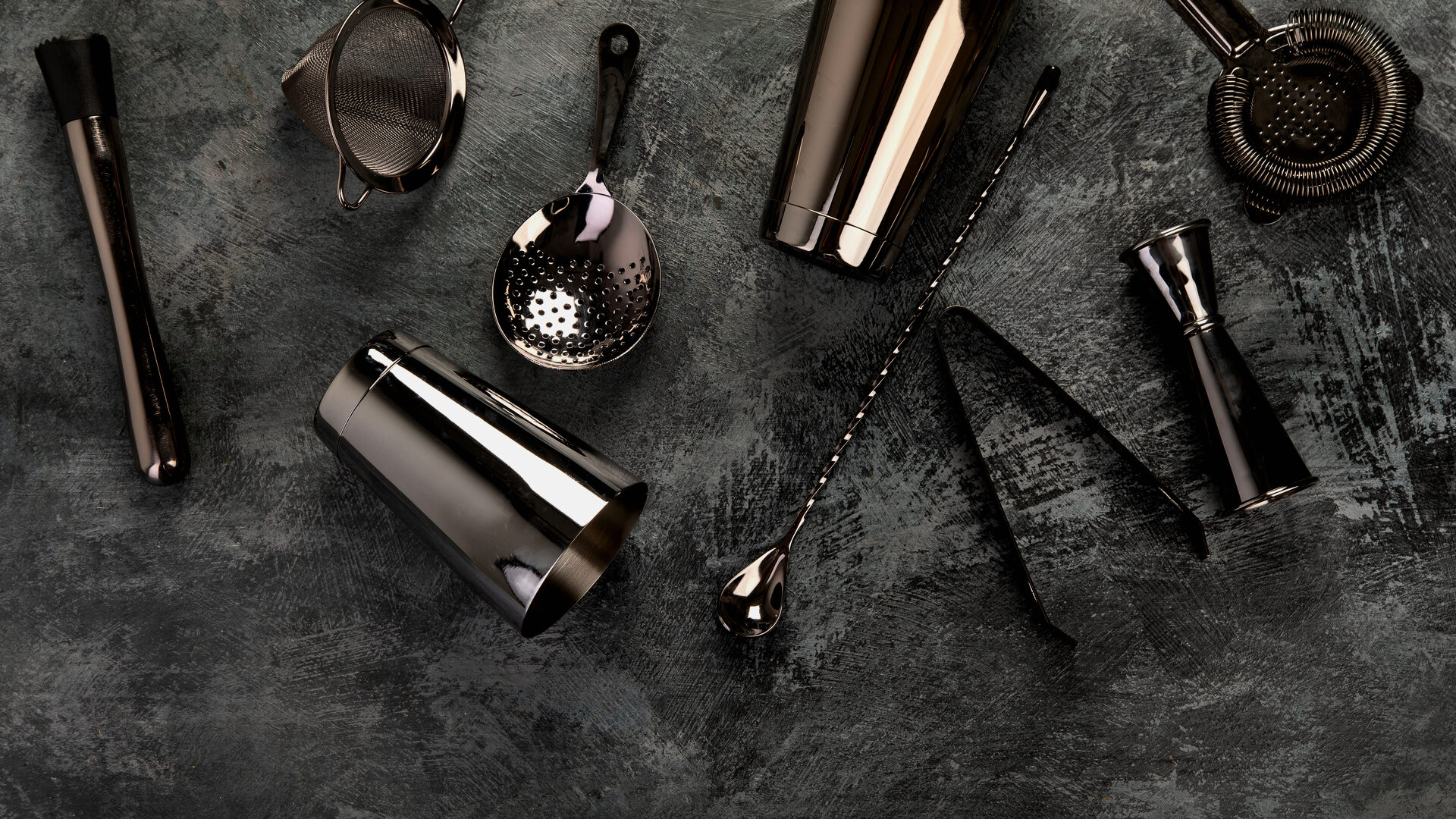
  • A Bar Cart Worth Having

    A Bar Cart Worth Having

    The bar cart is not about having everything. It’s about having the right things — chosen with some intention, arranged without ceremony, ready when you want them.

    Most people’s home bars grow by accident. A bottle from a trip. A glass from a wedding. A shaker someone left behind. The result is a cart that works against you — mismatched, incomplete, slightly awkward every time someone asks for a drink.

    This is a different approach. Not a collection. A setup.


    The Glass

    Start here. A good rocks glass changes how a drink feels before you’ve tasted it — the weight, the width, the way it sits in your hand. You want something substantial. Not heavy for the sake of it, but present. Riedel makes a rocks glass that gets this right without announcing itself. Two is enough to start.

    The List · Glassware

    Weighted well, sized right. These don’t announce themselves — they just work every time.

    See on Amazon →

    A pair of highball glasses earns its place too — for anything long, anything with ice and a mixer, anything you’re making for someone who doesn’t drink whisky neat.

    The List · Highball

    Simple, clear, not too tall. The kind of glass that works without trying.

    See on Amazon →

    The Pour

    A jigger is the difference between a drink that’s right and one that’s close. You don’t need to be precise out of obligation — you need to be precise because it matters. A double-sided jigger, one ounce on one end and two on the other, covers everything.

    The List · Measuring

    OXO makes a good one. Clear markings, weighted base, doesn’t tip.

    See on Amazon →

    The Stir

    A mixing glass and a bar spoon are for the stirred drinks — Manhattans, Negronis, Old Fashioneds. Stirring is slower and quieter than shaking. It keeps the drink cold without diluting it too fast, and it gives you something to do while you’re thinking.

    The mixing glass should be heavy enough to stay put. The spoon should be long — long enough that the spiral grip sits in your hand while the bowl reaches the bottom of the glass.

    The List · Mixing Glass

    A Yarai-style glass. Heavy base, clean lines. The kind of thing you leave on the cart.

    See on Amazon →
    The List · Bar Spoon

    Japanese-style, twisted shaft, 30cm. This one lasts.

    See on Amazon →
    The List · Strainer

    A Hawthorne strainer. Standard, reliable, fits any mixing glass.

    See on Amazon →

    The Ice

    Ice is the part people skip and then regret. A large cube melts slowly, which means your drink stays cold without becoming water before you’re done with it. One good tray. That’s all this takes.

    The List · Ice

    Tovolo makes a 2-inch cube tray that actually works — no spilling, no cracking, no wrestling it out of the mold.

    See on Amazon →

    That’s the setup. Seven items. None of them precious, all of them chosen. Add bottles as you go — one that you know well, one that’s new, one for guests. The cart takes care of itself from there.

  • Three Pages Before Sleep

    Three Pages Before Sleep

    There’s a reading we all do that doesn’t get talked about much. It happens between roughly eleven and midnight, in bed, by lamplight, after the day has been put down. It is small in volume — three pages, maybe — and it accomplishes something that fuller reading cannot.

    Long-form reading, the kind we do during the day, is for understanding. It builds. It accumulates. You read fifty pages, you have fifty pages of context, you know the thing better than you did. Late-night reading isn’t trying to do that. It is trying to seal the day.

    For this we recommend short pieces. Poetry is the obvious answer, and the right one. Mary Oliver before sleep is a particular kind of grace — five poems in fifteen minutes and you feel returned to yourself. Anne Carson is harder, more cerebral, but for certain moods she’s the only thing that fits. We’ve kept Plainwater on the bedside table for months at a time.

    But the form doesn’t have to be poetry. Essays work, if they’re short enough. James Salter’s Burning the Days is built for this, the chapters unhurried but compact, the sentences each finished and beautiful and complete in themselves. You can stop anywhere and not feel cheated.

    Aphorisms work too — Pessoa’s Book of Disquiet is dangerous if you’re trying to sleep because you’ll keep going, but in small doses it’s transcendent. So is Joubert. So is Vauvenargues if you can find him. The point is something with edges, something that finishes.

    What you’re avoiding is the chapter. Chapters are the enemy of the late hour. A chapter is a unit of attention designed to be sustained, and the late hour is the wrong time for sustained attention. You don’t want to be pulled forward. You want to be allowed to stop.

    This is also why genre fiction at midnight is, in our view, slightly the wrong choice — not because it’s lesser, but because plot is propulsive. The whole point of a thriller is that you can’t put it down. You’re in bed. You need to put it down. So pick something that lets you.

    There’s a related practice we want to defend. We are in favor of rereading at this hour. The first read of anything good is exciting, and exciting is not what you need at eleven-forty-five. The hundredth read of a poem you’ve loved for a decade is something else — a recognition, a kind of homecoming. You don’t have to attend to it the way you do a first read. You can let it move past you and just register the parts you remember.

    And if it’s been a hard day, we have a slightly cheating recommendation: read the same three pages you read last night. The repetition is its own salve. The pages don’t change. We do.

    A logistical note. The reading lamp matters. Cool overhead light at midnight will defeat anything you try to do in a book. A small warm bulb, on the nightstand, low and at the page — that’s the shape of it. The room should be a little dim around the edges. The rest of the world should already be done.

    We’d say also: a physical book. Phones ruin the practice. Even the e-reader is borderline. You’re trying to leave the day, and the day lives in screens. A book — paper, weight, cover — is an object that exists outside the day’s economy. It does not buzz at you. It does not log you in. It just sits there waiting to be opened.

    Three pages, a good lamp, a book that finishes its sentences. That’s the whole assignment. After-hours reading is not for getting through anything. It is for marking that you got through today.

    The light goes off after, of course. That’s the other thing. Set the book down somewhere you’ll find it tomorrow. Then sleep, easier than you would have without.

    Worth Having · The Light

    A Glocusent LED neck reading light. Warm tone, adjustable brightness, doesn’t disturb the room. Better than it has any right to be.

    See on Amazon →
  • The Reservation

    The Reservation

    THE LIBRARY  —  SHORT FICTION

    She made the reservation under her own name this time.

    It had always been under his — a habit from the years when he handled the logistics and she handled everything else. The host at Alma had greeted her with his name for so long that she’d almost forgotten it was strange, had almost forgotten there was another way to arrive.

    “Last name?” the woman on the phone asked.

    She said it. Her own. And something small shifted.

    Alma on a Thursday. The corner table, the one they’d had the first time and most times after — a small booth near the window where the light came in warm and low and the city moved outside in that particular way it moves when you’re watching it from somewhere good. She had loved that table. She still did. That was the thing she needed to know: whether she still did.

    She arrived at eight, which was later than she usually arrived anywhere, but this required a different version of herself. A version who wore the gray dress and took a cab instead of walking. A version who ordered a Negroni without being asked whether she was sure.

    She was sure.

    The host — not the one who knew his name — led her to a different table. Smaller, two-top, near the bar. She almost said something. Instead she sat down and opened the menu she knew by heart and ordered the thing she’d always ordered but never actually chosen, because he had a way of choosing for both of them without meaning to.

    The pasta with the brown butter. It was extraordinary, as it had always been.

    She ate slowly. She watched the room. A couple near the window argued quietly about something that clearly wasn’t what they were arguing about. Two women laughed so hard one of them had to press a napkin to her face. A man sat alone at the bar and nursed a whiskey like it owed him something.

    She understood him.

    When the check came she paid it without doing the math she used to do — the accounting of halves that had felt like fairness and later like something else. She left a generous tip. She put on her coat without anyone helping her with it.

    Outside, the night was the kind of night this city occasionally produces — cool and smelling faintly of rain that had happened somewhere else, the streets amber-lit and emptier than you expected. She stood on the pavement for a moment and didn’t take out her phone.

    She had done it. Alma on a Thursday. The Negroni, the pasta, the corner-adjacent table, the city through someone else’s window.

    She had been fine.

    More than fine, she thought, walking west. Something lighter. Something that had nothing to do with him and everything to do with the gray dress and the cab and the tip she didn’t calculate.

    She had been exactly herself.

    That, she decided, was enough to build from.


    — Vesper

  • Tuesday

    Tuesday

    THE LIBRARY  —  FICTION


    The bar was the kind of place that didn’t try too hard. Low light, good bourbon, music that stayed out of the way. She had been coming here alone on Tuesday nights for three months, always the same stool, always a book she pretended to read.

    He sat two stools down the first night he appeared. Ordered without looking at the menu. Didn’t try to talk to her. She noticed this specifically — the not trying — and found it more interesting than anything a man had said to her in recent memory.

    The second Tuesday he was there again. Same stool. She moved one closer without thinking about it, or told herself she hadn’t thought about it. He glanced over. Something passed between them that had no name and didn’t need one.

    By the third Tuesday she had stopped pretending to read. They talked for two hours about things she couldn’t fully remember afterward — cities, childhood, the specific loneliness of being good at your job. He had a way of listening that felt like being held. Not physically. Something more interior than that.

    When they finally kissed it was in the doorway of the bar at last call, rain coming down outside in that particular way that makes a city feel like it belongs only to the two of you. His hand at the back of her neck. Her fingers curled into his lapel. The world reduced to exactly this much space and no more.

    She would think about it later — not the kiss itself, though the kiss was something — but the moment just before. The held breath. The choice that hadn’t quite been made yet. The unbearable, exquisite weight of almost.

    Some things are better in the approach than the arrival. This was not one of them.


    EDITOR’S PICK  —  CURATED BY VESPER