
Sunday

  • Come Away With Me

    Come Away With Me

    2002  ·  Blue Note Records  ·  Album

    The album that made late-night feel like a place worth staying.

    Come Away With Me arrived in 2002 and promptly sold ten million copies, which is the kind of success that can make a record seem more ordinary than it is. Set against it now, the album holds up not as a phenomenon but as a quietly achieved thing: a collection of songs that know exactly how much room to take up. Norah Jones’s voice is warm without being cloying, and she plays piano with a restraint that gives the arrangements space to breathe. The production by Arif Mardin is tasteful in the original sense — it serves the songs rather than decorating them. There are no wasted moments on this record. Every track earns its place.

    Put it on when dinner is finished and nobody has moved from the table yet. It suits the end of an evening better than the beginning — the point when the candles have burned down and the conversation has moved past the things you were saving to say. It works at low volume, on a Sunday when the apartment is quiet, or in the background of something that deserves a soundtrack. The title track and the closing number bracket the album with something close to a complete emotional statement. Not every debut pulls that off.


    VERDICT  ·  The album that made an ordinary evening feel worth having.

    POUR  ·  A bourbon, neat and unhurried. Or whatever is already poured.


    Planning an evening around this? The Vinyl and Nothing Else →

    Find the Record

    Come Away With Me on vinyl. One of those pressings that still holds up. A good room deserves a good copy.

    See on Amazon →

    Some records belong on the shelf, not the queue. Find it on vinyl.

  • My One and Only Thrill

    My One and Only Thrill

    2009  ·  Verve Records  ·  Album

    An album that earns the second side — and the hour after that.

    There is a version of late-night listening that asks almost nothing of you — it simply fills the room and lets you stay inside it. My One and Only Thrill is that kind of record, but it does something more precise than ambience: it holds a mood without repeating itself. Melody Gardot’s voice is one of the more unusual instruments in contemporary jazz — hushed to the point of fragility but never without control, moving between resignation and something closer to grace. The arrangements by Vince Mendoza, best known for his work with Joni Mitchell, give the album its depth — strings that arrive without announcement and retreat the same way. The title track alone justifies the whole thing. It is the kind of song that makes you set down whatever you were doing and simply listen.

    Put it on late, when the evening has already decided what it is. It works best at low volume, which is a rarer quality than it sounds — most records shrink at low volume, this one opens. It is a good album for the end of dinner when neither person is ready to leave the table, or for a Sunday evening that has no particular destination. Gardot released it in 2009 and it has aged without effort, which is the final proof of the thing. Some records belong to their moment. This one belongs to any night quiet enough to hear it.


    VERDICT  ·  A record that belongs to any night quiet enough to hear it.

    POUR  ·  A Calvados, or a good cognac. Something with age and no hurry.


    Planning an evening around this? An Album-Length Conversation →

    Find the Record

    Melody Gardot on vinyl. Worth hunting down. Some records sound better off a shelf than a speaker.

    See on Amazon →

    An album worth hearing in full. Find it on vinyl.

  • A Quiet Tuscan Sunday

    A Quiet Tuscan Sunday

    Staying in. About three hours, mostly waiting.

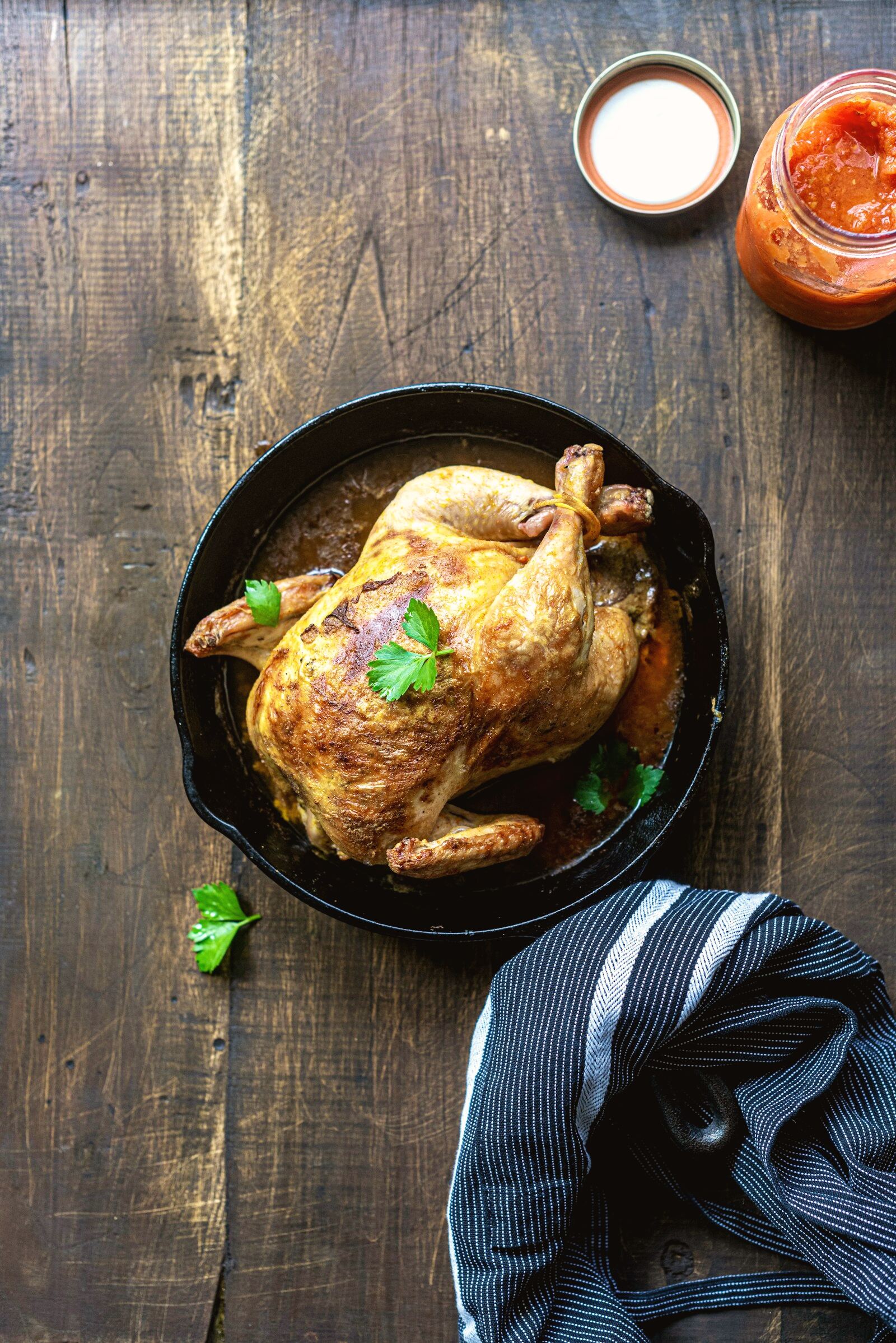
    There is an evening worth saving for the kind of week that won’t let you go. You don’t need a reservation. You don’t need to be anywhere by seven. You need a chicken, a hot oven, and the willingness to let dinner take three hours instead of forty minutes.

    The trick is to start before you think you need to. Take the bird — four to five pounds, whole — out of the fridge a full hour before it sees heat. (Cold chicken doesn’t roast, it sweats.) Pat it dry with more paper towels than feels reasonable. Then salt it generously, inside and out — about 2 teaspoons of kosher salt for a 4–5 lb bird, more on the skin than you’d think.

    Halve a lemon and tuck it into the cavity along with enough rosemary that the kitchen smells like Tuscany before the chicken is done — fresh sprigs, a small handful, stems and all, maybe four or five branches. Add four cloves of garlic, smashed but not peeled. Rub the skin with olive oil until it shines. Then send it into a 425°F oven for about an hour and ten minutes, until the thigh reads 165°F or the juice runs clear when you pierce it.

    While it cooks, do nothing useful. Pour a glass of wine. Open a window if it’s warm enough. Light a candle for the table even though it’s still light out. The smell will arrive before the bird does — that’s the point of the rosemary, that’s the point of the long approach. It’s an evening that announces itself.

    The only non-negotiable part comes when the chicken comes out: rest it for fifteen minutes before carving. Don’t skip this. This is the difference between a juicy bird and a dry one — the difference between a dinner that feels generous and one that doesn’t.

    Around the chicken, keep it simple. A bottle of Chianti — this isn’t the wine to overthink, this is the wine to drink. Bread, torn not sliced, to chase the pan juices. Arugula tossed with shaved parmesan, lemon, and good olive oil if you want something green on the table. That’s all. The bird is the point.

    Eat slowly. Pour the second glass of wine before you think you want it. Talk about something that isn’t work and isn’t logistics. If the conversation drifts to nothing, let it. Some dinners are about what gets said. This one is about what doesn’t need to be.


    FIND YOUR LOCAL EQUIVALENT

    If Tuscan isn’t your kitchen, the principle travels. The bones of this evening — a whole roasted bird, an oven that doesn’t quit, the patience to let the house fill up with smell before anyone gets to eat — work in any tradition. Thyme and lemon for something more French. Oregano and orange peel for Greek. Sage and butter for something more northern. Cumin and preserved lemon for a Moroccan turn. The aromatic changes; the slow Sunday doesn’t.

    IF YOU’D RATHER BE SERVED

    Via Carota, in the West Village, has been doing a version of this exact evening for years. A small candlelit Italian room, no reservations, no fuss. The whole roasted chicken on their menu — splayed flat with herbs over Castelfranco — captures the same intent: the bird as the point, the room as the atmosphere, the wine list as a one-page suggestion rather than an interrogation. Walk in at 5:30, or wait an hour at the bar with a Negroni. Either way you’ll come out understanding what we’re trying to make at home.