Date Night

Curated evenings for two — ideas, blueprints, and atmospheres for the art of the evening.

  • The Long Game Night

    The Long Game Night

    Date Night — Staying In

    Game night usually means a crowd — a table of friends, a party game, a lot of noise. But the game night for two is a quieter and underrated thing: one board, two players, a whole evening, and the gentle, low-stakes pleasure of playing against the person you like most.

    WHY TWO IS DIFFERENT

    A game with friends is social; a game with one other person is something closer to a conversation. There are long stretches of thinking, of watching the other person decide, of easy talk between turns. The game gives the evening a spine — a reason to be at the table — but it leaves enormous room around itself for everything else.

    Friendly competition is also, in small doses, good for a couple. It is a safe place to be a little sharp with each other, to tease, to genuinely try to win and then let it go entirely when the board is folded away. You learn things — who plots three moves ahead, who bluffs, who is a gracious loser — and you learn them while laughing.

    HOW TO DO IT

    Pick a game built for two — there are many designed specifically for it, and they are better for the purpose than a six-player game played short. Make it the whole evening, not a filler: pour something, put a record on low, settle in for a real session rather than one quick round. Best of three or five gives the night a shape and an ending.

    Keep the stakes exactly where they belong — high enough to make you try, low enough that the loser pours the winner a drink and means it. Set up the board tonight.


    POUR — A drink each, refilled by whoever lost the last round.

    MOOD — Competitive. Easy. Laughing between turns.

  • The Soundtrack Evening

    The Soundtrack Evening

    Date Night — Listening

    Here is a small, particular date: put on the soundtrack to a film you both love, and do not watch the film. Just play the music — the score, the songs, the record the movie left behind — and let it run while you do something else, or nothing else, together.

    WHY IT WORKS

    A soundtrack you both know is a strange and lovely object. It is music, but it is also memory — every track is wired to a scene, a feeling, the night you first saw the film, perhaps the night you saw it together. Playing it is a way of revisiting all of that without sitting through the movie. The music carries the whole story in compressed form.

    And it makes a perfect evening’s background precisely because you both already know it. There is no learning curve, no one track that pulls focus — just a familiar emotional landscape filling the room. You can talk over it, cook to it, sit in it. The soundtrack sets a mood you have both already agreed to love.

    WHAT TO PLAY

    Choose a film whose music genuinely stands on its own — and the films about music are the natural place to start, where the songs were the point. Once is close to the ideal case: a small film whose soundtrack is so complete, so much its own record, that an evening spent inside it feels like the film distilled to its essence.

    Pour something, put it on, and let the music play the film back to you both — quietly, in the background, all evening.

    More on the film in The Scene: Once.


    POUR — A glass of wine, the soundtrack already playing.

    MOOD — Familiar. Warm. Scored by something you both love.

  • The Documentary Night

    The Documentary Night

    Date Night — Watching

    The default date-night film is fiction — a story, a romance, a thriller. The documentary rarely makes the shortlist, and that is a small mistake. A good documentary is one of the best things two people can watch together, because it does not just fill the evening. It hands you the conversation that follows it.

    WHY IT WORKS AS A DATE

    A drama tends to end in a feeling — you sit with it, maybe say that was good, and move on. A documentary ends in a subject. You finish it knowing something you did not know two hours ago, and so does the person beside you, and now you both have it. The film becomes a thing to think out loud about together rather than just a thing you watched.

    It is also a small act of mutual curiosity. Choosing a documentary on a topic neither of you knows well is a way of saying let us go and learn something together — and being curious side by side is its own quiet form of intimacy.

    HOW TO DO IT

    Pick a subject, not a title — agree on something you are both faintly curious about and find the documentary from there. Music documentaries are an easy, reliable entry point; so are ones about food, design, the natural world, a single strange history. Keep the lights low like any film night. And leave room afterward — do not start something else right away. The conversation is the second feature.

    A documentary date is a film and a seminar and a conversation, all for the price of one evening in. Choose one this week.

    More on the live recording in The Scene: At Folsom Prison — Johnny Cash.


    POUR — A drink to suit the subject. A whiskey for the music ones.

    MOOD — Curious. Engaged. Still talking after the credits.

  • The Record Shop Afternoon

    The Record Shop Afternoon

    Date Night — Going Out

    The record shop is one of the great daytime dates, and it asks almost nothing of you. There is no reservation, no dress code, no pressure to perform. There is a room full of crates, an afternoon, and the shared, low-grade thrill of looking for something without quite knowing what.

    WHY IT WORKS

    A record shop is a date with a built-in activity that is also a built-in conversation. You flip through crates, and every sleeve is a small prompt — did you ever hear this, my dad had this, I have always meant to listen to this. The browsing keeps producing things to talk about without either of you having to generate them.

    It is also quietly revealing, in the gentlest way. You learn a person through what they pull from the crate, what makes them light up, what they put back. And you can drift apart to different sections and reconvene — the date has natural slack in it, room to be together and separately absorbed at the same time.

    HOW TO DO IT

    Give it real time — a record shop afternoon should not be rushed. Set a small, fun rule to give the browsing a point: each of you picks one record for the other, blind, based on what you have learned that afternoon. A budget keeps it light. The two records you carry home become the evening’s soundtrack and the afternoon’s souvenir.

    Then take the finds home and play them. The date does not end at the shop door — it carries on, at thirty-three revolutions a minute, for the rest of the evening.


    POUR — Coffee on the way in. A drink at home, with the new records on.

    MOOD — Unhurried. Curious. Flipping through the crates.

  • Breakfast for Dinner

    Breakfast for Dinner

    Date Night — Dining

    There is a particular pleasure, mild and entirely harmless, in eating the wrong meal at the wrong time. Breakfast for dinner — eggs at eight in the evening, pancakes after dark, toast and coffee when the day is ending rather than beginning — is a tiny domestic rebellion, and it makes a genuinely good date.

    WHY IT WORKS

    Breakfast food is comfort food. It is warm, simple, familiar, and almost impossible to get wrong. Cooking it carries none of the performance anxiety of a real dinner — nobody fails at scrambled eggs. So a breakfast-for-dinner date is low-stakes by design: you are cooking together in the easiest possible kitchen.

    And the wrongness of the timing is the charm. Eating pancakes at night feels faintly like getting away with something. It breaks the ordinary rhythm of the evening just enough to make the night feel set apart — a small shared decision to do things slightly out of order, together.

    HOW TO DO IT

    Cook it side by side — breakfast is forgiving enough that two cooks in one kitchen is a pleasure, not a collision. Eggs however you both like them, something on the side, good toast, real coffee or, better, a cocktail that nods at morning without pretending. Eat it somewhere other than the usual dinner spot, just to complete the gentle wrongness.

    It costs almost nothing, takes twenty minutes, and turns an ordinary night into one with a small, cheerful joke at its center. Eat breakfast tonight.


    POUR — Coffee, or a drink that winks at morning. Mimosa after dark counts.

    MOOD — Cozy. Playful. Pleasantly out of order.

  • The Walking Date

    The Walking Date

    Date Night — Going Out

    The most underrated date is also the cheapest and the simplest: a walk. No reservation, no venue, no plan beyond a direction. Just a city, a few hours, and two people on foot — and a conversation given room to wander as freely as you do.

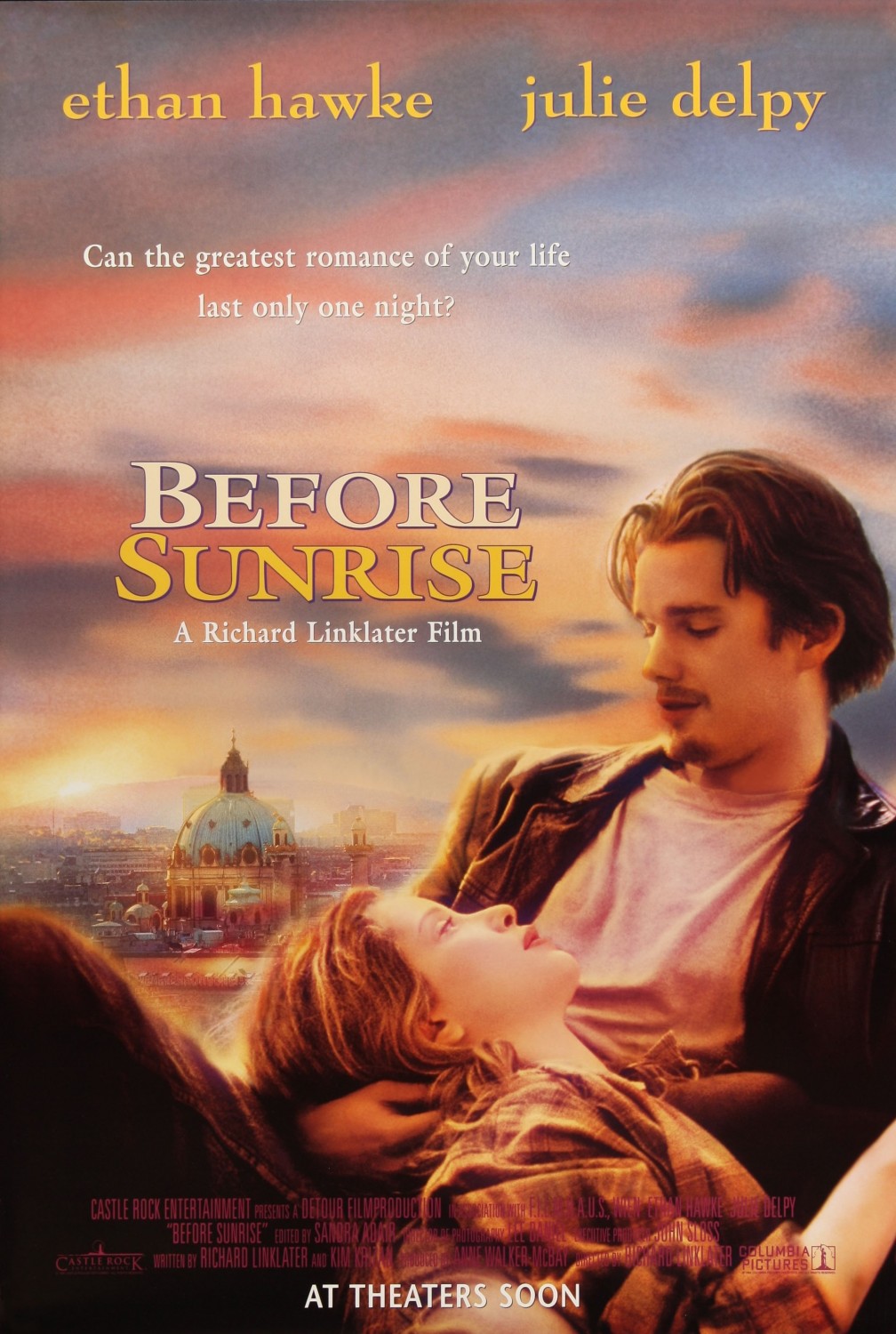
    If Before Sunrise made anything clear, it is that an entire romance can happen on a walk. The film is barely more than that: two people, one city, one long stroll through a night. It works because walking and talking belong together.

    WHY WALKING HELPS

    A walk fixes the thing that makes a sit-down date occasionally hard — the unbroken eye contact, the conversation with nowhere to rest. Side by side and moving, you both have somewhere else to look. The talk loosens. Silences stop being silences and become just two people walking, comfortable, between things to say.

    And the city keeps feeding you material. A shop window, a building, a stranger’s dog, a turn down a street neither of you knows — every block hands the conversation a new thing. A walking date never runs out of subject, because the world keeps providing one.

    HOW TO DO IT

    Pick a direction, not a destination. Walk somewhere one of you knows and the other does not, or somewhere neither of you does. Let it be long. Stop when something asks you to — a bench, a bar, a view — and then keep going. Have a loose idea of a drink or a coffee somewhere along the route, so the walk has a punctuation mark or two, but do not over-plan it.

    For the film that perfected the form, see our Scene review of Before Sunrise. For tonight, just pick a direction and start walking.

    The film that perfected the form, reviewed in The Scene: Before Sunrise.


    POUR — A coffee mid-walk, a glass of wine wherever you end up.

    MOOD — Wandering. Easy. Talking block by block.

  • The Power Cut Evening

    The Power Cut Evening

    Date Night — Staying In

    Every so often the grid makes a decision for you. The lights go out, the screens die, the hum of the house falls silent — and what is left is an evening stripped down to candlelight and each other. It is an inconvenience. It is also, if you let it be, one of the best dates you will not have planned.

    WHY THE DARK HELPS

    A power cut removes the entire menu of distractions at once. No television, no scrolling, no half-attention. The options collapse down to talking, candlelight, and whatever you can do without electricity — and that collapse is the gift. The evening gets very simple, very fast.

    Candlelight does the rest. It softens the room, slows everyone down, and creates the kind of pooled, intimate light that restaurants spend fortunes trying to imitate. The house you know perfectly becomes, for a few hours, a slightly different and more romantic place.

    HOW TO MEET IT

    Have the makings ready before you ever need them — candles in a drawer, matches, a couple of good ones in holders. When the lights go, resist the instinct to treat it as a problem to be managed. Light the candles. Pour something. Find the cards, or do not — talking in the dark is its own activity, and a surprisingly good one.

    The power will come back. The evening it gave you does not have to end when it does — leave a candle or two burning anyway.


    POUR — Wine, or a whiskey — something that needs no electricity and no ice.

    MOOD — Candlelit. Stripped down. Quietly glad of the dark.

  • The Headphone Hour

    The Headphone Hour

    Date Night — Listening

    Here is a small, strange, very good date: two people, one album, two pairs of headphones, the same room. You press play at the same moment and then you do not speak. For the length of a record, you are listening to the exact same thing, alone, together.

    WHY IT IS DIFFERENT

    Speakers fill a room — the music becomes the shared air, and you talk over it, around it, through it. Headphones do the opposite. They put the music inside you. The sound is close and private and detailed in a way no room playback can match. You hear the breath before the vocal, the fingers on the strings.

    Doing that beside someone, on the same record, at the same time, is a quietly intimate thing. You are each having a private experience — and you are having the identical private experience, in sync, knowing the other person is somewhere inside the same sound. When the record ends and you take the headphones off, you have something exact to talk about.

    HOW TO DO IT

    Pick a record worth the detail — something richly produced, something that rewards hearing the small things. A jazz record is close to ideal; an album like Coltrane’s A Love Supreme reveals layers on headphones that speakers simply blur. Sit comfortably. Press play together. Do not talk until it ends.

    Then take them off, and compare the hour. You will find you each heard a slightly different record — and that difference is the conversation.

    More on the record itself in The Scene: A Love Supreme — John Coltrane.


    POUR — One drink each, set down within reach before you start.

    MOOD — Close. Interior. Synced and silent.

  • The Jazz Club

    The Jazz Club

    Date Night — Going Out

    The jazz club is one of the great date venues, and an underused one. A small dark room, a trio or a quartet in the corner, two drinks on a tiny table, and an hour that asks very little of you except that you listen.

    WHY IT WORKS

    A jazz club solves the central problem of the going-out date — the pressure on the conversation — without solving it the way a movie does. A film demands silence; you sit side by side and do not talk at all. A jazz set leaves room. You can lean in and say something between numbers, or sit quietly through a long solo, and neither feels like a failure. The music sets a generous rhythm and you follow it.

    It is also a room built for closeness. Jazz clubs are small and low-lit by design. The tables are tiny. You end up near each other simply because the architecture insists on it, and the music gives you something to be near each other about.

    HOW TO DO IT

    Go to a real club, not a restaurant with a band in the corner — you want a room where the music is the point and the kitchen is not. Get there early enough for a good table. Order simply; this is not a dinner. And resist talking through the playing. The conversation can happen between sets. During the music, just listen, together — that shared listening is the date.

    Two drinks, a dark room, a standard played slow. Few evenings out are this easy or this good.


    POUR — An old fashioned, or a glass of something brown. Sip it slow.

    MOOD — Low-lit. Close. Listening more than talking.

  • Films of Quiet Restraint

    Films of Quiet Restraint

    Date Night — Watching

    Some films shout their love stories. These do not. They are built on restraint — on glances, pauses, the things characters almost say and then do not — and they ask the viewer to lean in and do some of the work. Watched with the right person, that leaning-in is the whole pleasure.

    A watchlist for an evening that wants to feel a great deal while almost nothing is said.

    THE REMAINS OF THE DAY (1993)

    The standard for the form. A butler and a housekeeper, years of unspoken feeling, and a final parting in the rain that lands like a held breath finally released.

    IN THE MOOD FOR LOVE (2000)

    Two neighbors, a love affair they refuse to begin, and Wong Kar-wai turning every corridor and clock into longing. Restraint shot like a fever.

    LOST IN TRANSLATION (2003)

    A few days, a quiet hotel, and a connection neither names. The unheard whisper at the end is the film keeping its own counsel — and trusting you to.

    PORTRAIT OF A LADY ON FIRE (2019)

    A painter, her subject, and a love conducted mostly in looks across a room. A film that understands restraint and desire are the same heat at different temperatures.

    Pick one. Pour something quiet. Let the silences do the talking — and let the two of you fill them in afterward.

    Read the full film review in The Scene: The Remains of the Day.


    POUR — A glass of wine, red, sipped slowly through the quiet.

    MOOD — Hushed. Attentive. Leaning in.