
Staying In

  • The Living Room Cocktail Hour

    The Living Room Cocktail Hour

    Setting the room before they arrive. A small private cocktail hour, just the two of you. (~60 minutes, low light, two drinks each, nowhere to be after.)

    There’s a date we used to do early in our relationship, back when going out felt expensive and we still cared about impressing each other. We’ve done it for a decade now. It’s gotten better.

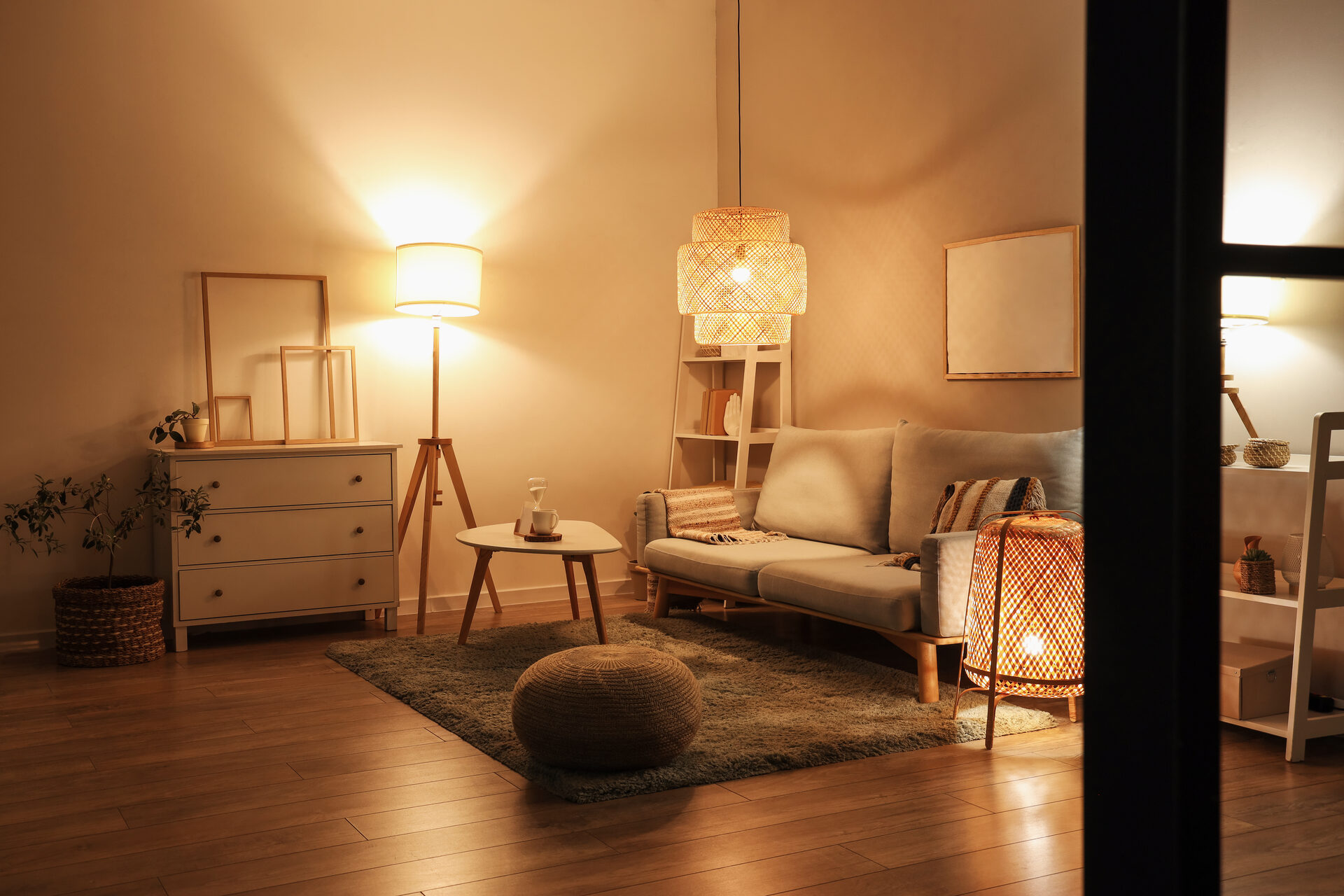
    The setup. (One of you arrives home about forty-five minutes before the other, or — if you’re already living together — one of you sets the room while the other is showering.) Lamps on, overheads off. Candles if you’re a candle person, which you should be. Music, low — something built for a room rather than a workout. (A lounge or vocal jazz playlist works. Something instrumental works too. Not the radio.) Glassware out and waiting. Ice in a small bowl on the bar cart, or the kitchen counter, or wherever you make drinks. A small dish of nuts or olives within reach. The phones are charging in another room.

    That’s the room. The whole point is that when the other person walks in (or out of the bathroom), there’s already a feeling. A small ceremony has been set up. You did it for them. They notice.

    The drinks part is the easy part. (Two cocktails each is the right number — one to begin and unwind, one to ease into.) Pick a single house drink for the evening rather than a cocktail menu. The Negroni is reliable. The Boulevardier in winter. A martini if you’ve both calibrated to it. A spritz on a summer evening. Don’t be ambitious. The whole point of a cocktail at home is that you make it the way you like it, exactly, with no negotiation. (Three-quarter ounce of this, an ounce-and-a-half of that, a stir of forty seconds, one large cube.)

    What you do for the hour is the part that gets weird if you’ve never done it. We are conditioned to fill quiet with activity. A cocktail hour at home, just two people, has no activity in it by design. You’re not watching anything. You’re not on phones. You’re not cooking yet — dinner, if there is dinner, is for after, or it’s already prepped and waiting.

    So you talk. Or you don’t. (Five or ten minutes of comfortable silence in a low-lit room with a drink in your hand is something most couples never experience, because they’ve never set up the conditions.) You can read. We’ve spent a lot of cocktail hours reading on the couch, opposite ends, books between us, drinks on the side tables, music low. That is a date. We’re not making this up.

    If you do talk, the conversation has the same quality as the slow goodnight or the one-block walk. It tends toward the small and the noticing. The plant on the windowsill is finally blooming. Somebody texted something funny earlier. The neighbor moved out. (You will be more affectionate during the cocktail hour than you have been all day. We’re still not sure why this is true. Maybe it’s the lamps.)

    Dinner can come after, or you can let the cocktail hour stretch and order in. (There’s a strong case for ordering in on a Friday and letting the hour become two — start at six-thirty, food arrives at eight, lights stay low all night.) The hour is the structure. The rest of the evening is whatever you want it to be after.

    What you’re doing, in the language of the rest of the site, is the staying-in version of the hotel bar. Same low light, same unhurried drink, same generosity of attention. You’ve just built it at home, for the two of you, with nobody else in the room.

    We can’t recommend it more.

    Find your local equivalent

    A bar cart isn’t necessary. A tray on a counter works. The minimum gear: two glasses you actually like, a single bottle of something, a citrus peeler, ice. Anything beyond that is preference.

    A note on US bottle shops

    Most American cities now have a serious wine-and-spirits shop with a knowledgeable staff. (In NYC: Astor Wines. In LA: Lincoln Fine Wines or K&L. In Chicago: Binny’s. In Boston: Gordon’s.) Tell the person behind the counter you’re trying to set up a home cocktail hour and you want one bottle of bitter, one of sweet vermouth, and one base spirit. They’ll know.

    Staying In · Cocktails · Home · Established · Comfortable · Weeknight · Weekend

    Worth Having · The Book

    Death & Co: Modern Classic Cocktails. The one that actually teaches you something. Worth keeping on the cart.

    See on Amazon →


  • An Album-Length Conversation

    An Album-Length Conversation

    A record played start to finish, no skipping, with someone you actually want to listen with. (~45 minutes, two seats, low light, drinks within reach.)

    We’ve stopped knowing how to listen to whole albums. The streaming services trained us out of it. The shuffle button trained us out of it. Putting on a record at a party and asking guests to please not talk over the second side feels eccentric now, where forty years ago it was just what you did.

    We want to recover this practice as a date.

    Here’s the form. (Forty-five minutes for a typical LP. Two chairs facing roughly the same direction, not opposite each other across a table — talking is not the goal, listening is.) No phones in hand. Drinks on side tables. Light low enough that you can close your eyes if a song asks you to. The record gets put on. The needle drops. You listen.

    This is harder than it sounds. The first three minutes you will both feel a faint awkwardness, because we’ve been trained to fill quiet with talking. Don’t. Let the awkwardness pass. By track three you’re inside the album. By the end of side one you’ve forgotten you’re doing a thing. Side two flips. The record ends. There’s a second of silence, and somebody says something, and the conversation that follows is unlike any other conversation you’d have had that evening.

    What you talk about, when you talk: the obvious things — what you noticed, which song surprised you, the lyric that landed. But also the things music opens up — what year you first heard this, who you used to listen to it with, the version of yourself that liked this album fifteen years ago and how you feel about that person now. (Two glasses of wine, a small cheese plate, no other plan for the evening.) The conversation will be different from a dinner conversation. Closer, maybe. Slower.

    A few records that work especially well for this date. Blue by Joni Mitchell — cliché, we know, but the cliché is correct. (Thirty-five minutes. Devastating.) Kind of Blue by Miles Davis if you don’t know each other deeply yet — there’s room inside it. (Forty-five minutes.) In the Aeroplane Over the Sea by Neutral Milk Hotel if you both came of age in the early 2000s. (Forty minutes — heavier than it sounds, sit with it.) A Love Supreme if you can both handle Coltrane sober. Pet Sounds on a Sunday afternoon with a window open. Songs in the Key of Life — that’s a two-evening date, side one and two on a Friday, sides three and four on a Saturday.

    The format also works with album-length pieces that aren’t strictly albums — Spiegel im Spiegel by Arvo Pärt, Music for 18 Musicians by Steve Reich, the second movement of any of the late Beethoven quartets. These are quieter, longer. They’ll change the temperature of the room.

    What you’re really doing on this date is sharing time. (Forty-five minutes is more time than most couples spend looking at the same thing simultaneously in a given week.) The album is the excuse. The shared attention is the substance.

    It’s an old-fashioned thing to do. Old-fashioned things are coming back into fashion. The thing about an album played all the way through is that you cannot half-do it. You either listened or you didn’t. If you both listened — really listened — you’ve done something together that nobody else did with anyone tonight.

    Find your local equivalent

    A turntable is ideal but not required. A good Bluetooth speaker and the original album played in order on a streaming service works. The discipline is in not skipping, not in the medium.

    A note on US record stores

    Most major US cities have a serious record store: Amoeba in LA, Rough Trade in New York, Reckless in Chicago, Bop Street in Seattle, Twist & Shout in Denver. A first-date version of this evening: pick a record together at the store earlier, then take it home and listen. The pre-stage at the store is half the date.

    Listening · Music · Album · Vinyl · Established · Comfortable · Weeknight · Staying In


    From The Scene → My One and Only Thrill →

  • A Quiet Tuscan Sunday

    A Quiet Tuscan Sunday

    Staying in. About three hours, mostly waiting.

    There is an evening worth saving for the kind of week that won’t let you go. You don’t need a reservation. You don’t need to be anywhere by seven. You need a chicken, a hot oven, and the willingness to let dinner take three hours instead of forty minutes.

    The trick is to start before you think you need to. Take the bird — four to five pounds, whole — out of the fridge a full hour before it sees heat. (Cold chicken doesn’t roast, it sweats.) Pat it dry with more paper towels than feels reasonable. Then salt it generously, inside and out — about 2 teaspoons of kosher salt for a 4–5 lb bird, more on the skin than you’d think.

    Halve a lemon and tuck it into the cavity along with enough rosemary that the kitchen smells like Tuscany before the chicken is done — fresh sprigs, a small handful, stems and all, maybe four or five branches. Add four cloves of garlic, smashed but not peeled. Rub the skin with olive oil until it shines. Then send it into a 425°F oven for about an hour and ten minutes, until the thigh reads 165°F or the juice runs clear when you pierce it.

    While it cooks, do nothing useful. Pour a glass of wine. Open a window if it’s warm enough. Light a candle for the table even though it’s still light out. The smell will arrive before the bird does — that’s the point of the rosemary, that’s the point of the long approach. It’s an evening that announces itself.

    The only non-negotiable part comes when the chicken comes out: rest it for fifteen minutes before carving. Don’t skip this. This is the difference between a juicy bird and a dry one — the difference between a dinner that feels generous and one that doesn’t.

    Around the chicken, keep it simple. A bottle of Chianti — this isn’t the wine to overthink, this is the wine to drink. Bread, torn not sliced, to chase the pan juices. Arugula tossed with shaved parmesan, lemon, and good olive oil if you want something green on the table. That’s all. The bird is the point.

    Eat slowly. Pour the second glass of wine before you think you want it. Talk about something that isn’t work and isn’t logistics. If the conversation drifts to nothing, let it. Some dinners are about what gets said. This one is about what doesn’t need to be.


    FIND YOUR LOCAL EQUIVALENT

    If Tuscan isn’t your kitchen, the principle travels. The bones of this evening — a whole roasted bird, an oven that doesn’t quit, the patience to let the house fill up with smell before anyone gets to eat — work in any tradition. Thyme and lemon for something more French. Oregano and orange peel for Greek. Sage and butter for something more northern. Cumin and preserved lemon for a Moroccan turn. The aromatic changes; the slow Sunday doesn’t.

    IF YOU’D RATHER BE SERVED

    Via Carota, in the West Village, has been doing a version of this exact evening for years. A small candlelit Italian room, no reservations, no fuss. The whole roasted chicken on their menu — splayed flat with herbs over Castelfranco — captures the same intent: the bird as the point, the room as the atmosphere, the wine list as a one-page suggestion rather than an interrogation. Walk in at 5:30, or wait an hour at the bar with a Negroni. Either way you’ll come out understanding what we’re trying to make at home.