
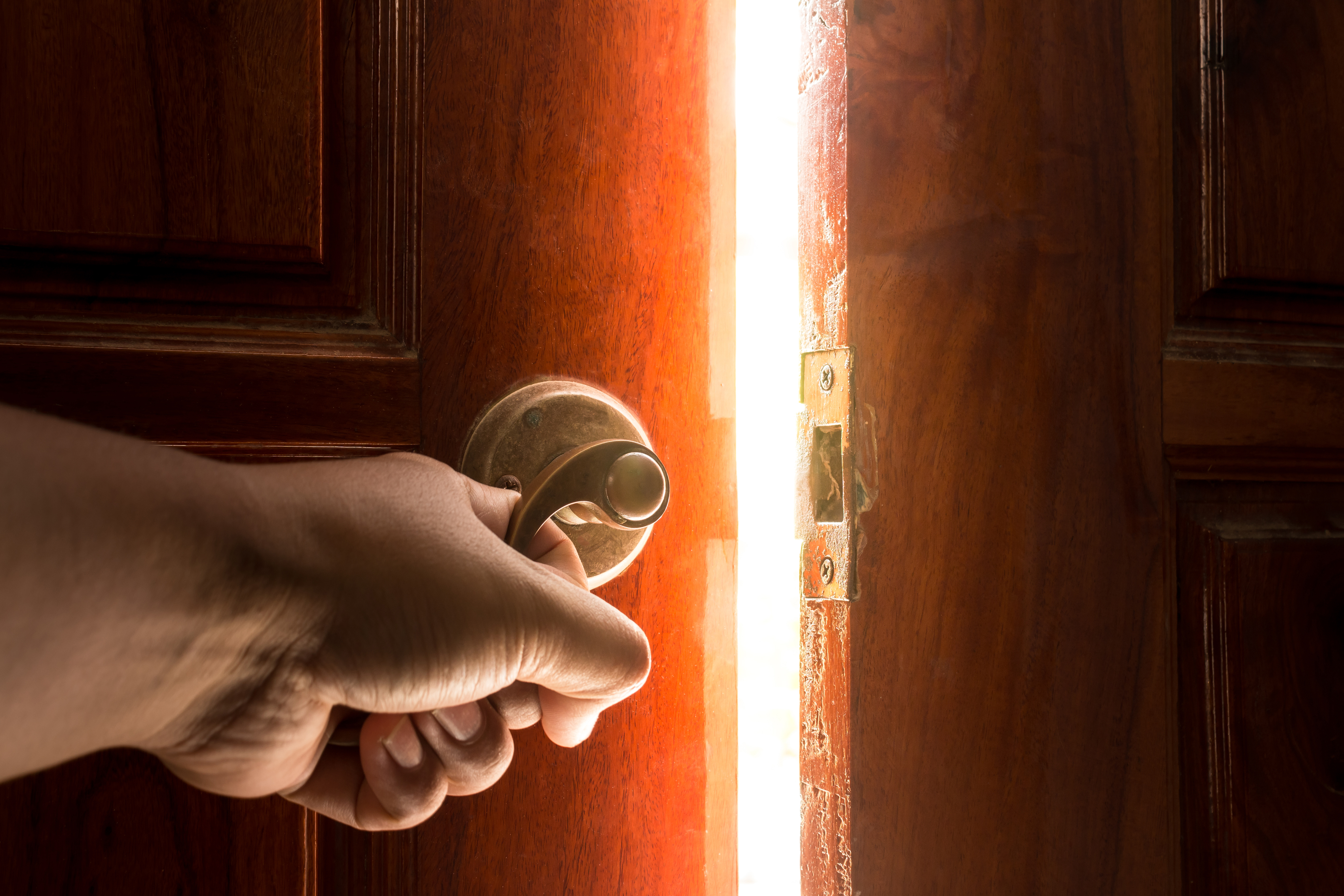
A closed door inside a home where you live with someone is one of the most quietly loaded objects there is — and one of the most necessary.
It is easy to read it as rejection. Someone you love has gone into a room and shut the door, and the animal part of you flinches at the closed thing, the small exclusion of it. But a closed door inside a shared life is rarely about shutting the other person out. It is about claiming, for an hour, the thing that even the closest intimacy requires: a space that is briefly and entirely one’s own.
Living closely with another person is wonderful and relentless. The self thins out under constant company; there is a version of you that only reconstitutes in solitude, and that version needs somewhere to go. The closed door is where it goes. Behind it, someone is reading, or working, or doing nothing at all — not away from you, exactly, but back with themselves for a while, so that the person who emerges is whole again and able to be with you properly. The closed door is in service of the open one.
The healthiest homes understand this. They treat the closed door not as a wound to be questioned but as a right to be respected — a signal that says I am here, I am fine, I just need this hour, and a household that can grant that without anxiety is a household where closeness is safe. The couples who last are often the ones who have learned to let each other disappear behind a door without taking it personally.
And then the door opens again, as it always does, and the person comes back out — restored, returned, ready. The closed door was never the opposite of togetherness. It was its precondition. We can only be close to the people we are also occasionally allowed to be apart from, and the door, swinging shut and then open again, is how a shared home keeps both things alive.
More from The Suite
Leave a Reply