
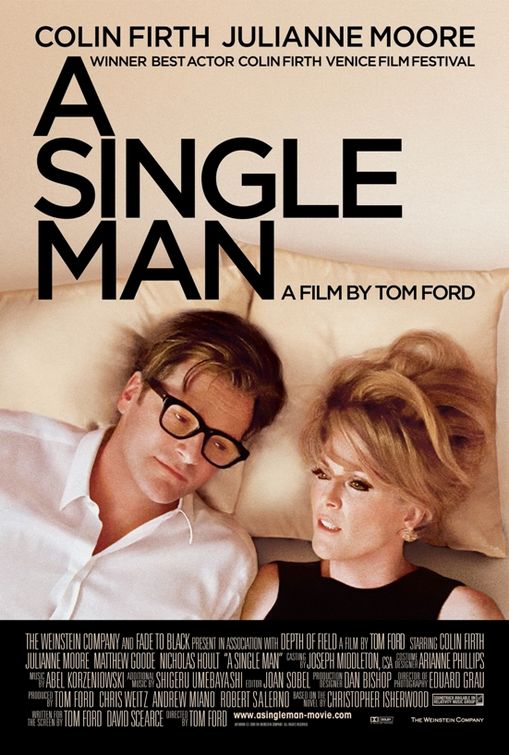
Tom Ford’s A Single Man could have been merely beautiful — the work of a fashion designer turned director, every frame styled to within an inch of its life. What makes it extraordinary is that the beauty is in service of grief, and the grief is real.
Adapted from Christopher Isherwood’s novel, the 2009 film follows George (Colin Firth), a British professor in 1962 Los Angeles, through a single day — the day he has quietly decided will be his last. His partner of sixteen years, Jim, has died in a car accident some months before, and George, forbidden by the era from even openly mourning, has been moving through a world that does not acknowledge his loss. The film is the record of one day inside that suppressed, immaculate, drowning grief.
Firth is astonishing, and was rightly recognized for it. He plays George as a man holding himself together by sheer discipline, every gesture controlled, the devastation visible only in the eyes and the smallest tremor of the hands. It is a performance built almost entirely on restraint, which makes the rare moments it cracks — a phone call delivering the news, a memory of Jim on a sofa with a dog — land like blows.
Ford shoots the film as a series of saturations: the world goes gray and beautiful around George until something pulls him briefly back to life — a student’s face, a stranger’s kindness, a chance encounter — and the color floods in. It is a literal device and it should be too much, but it works, because it externalizes exactly what grief does: the way the world dims, and the way small beauties can, for a moment, make it almost bearable to stay in it.
Beneath the impeccable surfaces is a film about whether a life is worth continuing, and it answers the question not with argument but with accumulation — the sensory pile-up of a single ordinary day, each small pleasure quietly making its case. The ending is both a mercy and a cruelty, and the film is honest enough to let it be both.
Watch it for Firth, and for the strange consolation of a film that takes loss seriously while insisting, frame by gorgeous frame, that the world remains worth looking at.
Ford composes every frame like a photograph; it holds up to owning. On Blu-ray.
Leave a Reply