Dining

Going out, staying in — the meal as the evening.

  • The Slow Dinner at Home

    The Slow Dinner at Home

    Staying In · Dining · For the evening that is worth taking seriously

    The slow dinner at home is not the same thing as cooking dinner. Cooking dinner is what you do on a Tuesday when you are tired and the fridge needs to be cleared. The slow dinner at home is a different animal: it is an evening that happens to involve food, where the cooking is part of the date rather than a task that precedes it.

    The distinction is in the pacing. A slow dinner at home takes at least three hours from first drink to last bite, and most of that time is not spent eating. It is spent in the kitchen while something simmers, at the counter with a glass of wine, at the table after the plates have been cleared and neither of you has moved yet. The meal is the occasion, not the point.

    How to Set It Up

    Pick something that cooks low and slow — a braise, a ragù, a roast that can sit in the oven while you do other things. The slow dinner at home requires a dish that rewards patience rather than attention, because your attention should be elsewhere. You are not performing a recipe. You are making an evening, and the food is one element of it.

    Open a bottle before you start cooking. Not a great bottle — save that for the table — but something good enough to drink while you work. Set music you will not have to think about. Clear the counter so the kitchen does not feel like a mess to manage. The environment is doing half the work here.

    The Table

    Set it properly. Candles if you have them, or just good lamp light — no overhead lighting if you can avoid it. Real glasses. Cloth napkins if they exist in your house; paper ones folded carefully if they do not. The table is a signal that this dinner is different from the usual, and the signal matters even when you both know you are at home.

    Eat slowly. Refill the glasses. Do not clear the plates the moment they are empty — let the meal breathe at the end the way a good wine does. The slow dinner at home earns its name in the last hour, when the food is gone and the conversation has moved somewhere it would not have reached if you had rushed.


    The film for this evening: Call Me by Your Name, reviewed in The Scene.

  • The Tasting Menu

    The Tasting Menu

    Three to five hours. You are not making choices tonight.

    The tasting menu is a particular kind of trust fall. You hand over the evening — the order of things, the pace of things, what arrives on the plate — and in return you get something that a regular dinner cannot quite replicate: sustained attention. A kitchen that has thought carefully about what comes after what.

    This is not about the money, though it does cost money (most serious tasting menus run between $95 and $250 per person before wine, which can double that). It’s about the container. An evening with a fixed structure and no decisions. You sit down, you eat what arrives, you talk. The meal becomes the architecture around the conversation.

    Choose somewhere that has been open long enough to have a point of view. The interesting menus are not the ones showcasing technique for its own sake — they are the ones where you can feel something the kitchen actually believes in. Regional sourcing. A specific season. An obsession with one ingredient that shows up in five different forms across twelve courses.

    A few notes on how to do this well. Make the reservation far enough in advance that it feels like an event (two to four weeks is reasonable for most cities; longer for the handful of places where this is a real occasion). Eat lightly that day. Decline the wine pairing if your budget is tight and order a bottle you actually want instead. Tell them about allergies early — not at the table, but when you book.

    Pace yourselves. The temptation between courses is to fill silence. Don’t. Let there be silence. Let the question just sit there for a moment before one of you answers. Tasting menus work because they slow time down — honor that.

    By course nine or ten something shifts. You’ve been together for three hours. You’ve talked about things you maybe hadn’t planned to talk about. The kitchen sends something small and strange and you’re both leaning forward to taste it at the same time. That’s the thing you’re paying for.

    Find your local equivalent

    Search “chef’s tasting menu” plus your city — most mid-size cities have at least one restaurant doing serious prix fixe work. James Beard nominees and semifinalists in your region are a reliable starting point. OpenTable and Resy both let you filter by tasting menu specifically. A ten-course meal at a serious regional restaurant will almost always outperform a comparable spend at a famous national name.

    A few worth knowing

    Alinea in Chicago remains the benchmark for theatrical American tasting menus. The Inn at Little Washington in Virginia is the kind of room where the occasion feels baked into the walls. Lazy Bear in San Francisco and Kann in Portland work the communal table format — dinner party energy rather than formal service. For something outside a major city, look to farm-to-table destinations that have been doing this for more than five years. They tend to have figured it out.

    dining  ·  going-out  ·  established  ·  splurge  ·  slow  ·  no-decisions  ·  long-evening  ·  special-occasion  ·  prix-fixe  ·  seasonal

  • The Sunday Brunch

    The Sunday Brunch

    Late morning into early afternoon. The day has nowhere to be.

    Sunday brunch as a date has a specific quality that dinner can’t replicate: it’s time you weren’t supposed to do anything with anyway. The absence of obligation is built in. You can stay for two hours or four. You can have coffee and then have more coffee. Nothing is pushing you out the door.

    This works best when you don’t rush to it. Sleep in. Move slowly. Arrive somewhere around eleven — not ten, when it’s still trying to be breakfast, and not one, when the kitchen is in the weeds and the best tables are taken (eleven to eleven-thirty is the sweet spot at most places; you’ll get better service and a better table).

    The menu is beside the point in a specific way. You’re not there to have the most impressive plate — you’re there to sit across from someone in the morning light and eat something warm. Order whatever you’d actually want to eat at that hour. The eggs benedict is probably fine. So is the stack of pancakes. The good brunch spots do both well enough that the choice is about what you feel like, not what’s better.

    Drinks deserve more consideration. A good Bloody Mary is worth having if they make their own mix (ask). Brunch cocktails are generally overpriced and oversweet; the exception is a place with a considered list rather than a laminated insert. If the coffee program is serious — proper espresso drinks, maybe a pour-over option — that’s usually a sign the kitchen takes the rest of it seriously too.

    The conversation at brunch is different from dinner conversation. You’re both a little slower, a little less defended. Things come up at eleven in the morning that wouldn’t come up at eight at night. There’s something about daylight and coffee and nowhere to be that loosens things.

    After, take a walk. There’s almost always somewhere to walk from a good brunch. The neighborhood, the park, the water if there’s water nearby. Let the meal extend into the afternoon without either of you deciding to extend it. Just keep moving and see what happens.

    Find your local equivalent

    The best brunch spots are almost never the ones with a line around the block. Those places have learned to extract maximum revenue from the weekend rush; they’re not set up for a slow morning. Look for a neighborhood restaurant that does dinner seriously and offers brunch as a quieter weekend mode. The brunch at a good bistro is usually better than the brunch at a dedicated brunch restaurant. Yelp filters for “good for groups” will surface the wrong places; look instead at what serious food people in your city are recommending on weekends.

    A regional note

    New Orleans takes brunch more seriously than anywhere else in America — Commander’s Palace on a Sunday is an experience with no equivalent. New York has more good brunch restaurants per capita than anywhere else, with the most interesting ones concentrated in the West Village, Park Slope, and Williamsburg. Chicago’s Logan Square has a cluster of genuinely excellent options. Most Southern cities punch above their weight on this particular meal.

    dining  ·  going-out  ·  any-stage  ·  weekend  ·  slow-morning  ·  daylight  ·  coffee  ·  no-rush  ·  sunday  ·  walk-after

  • The 9 PM Reservation

    The 9 PM Reservation

    A late dinner that resets the shape of the evening. (~2.5 hours, no rush, restaurant of substance, established couple or comfortable new one.)

    There’s a reservation slot most people skip, and it might be the best one. We’re talking about nine, or nine-fifteen — late enough that you arrive after the dinner-rush surge has crested and the kitchen has settled into its rhythm, early enough that the room is still alive.

    The seven o’clock seating is for people who treat dinner like a thing to get through. Eight is the standard date — fine, but the room is at peak volume, the staff is in the weeds, and you can feel the table being turned. Nine is something else. The waiter has a moment to actually talk to you. The kitchen has time. The wine list opens up because the bottle you wanted has already had the dust knocked off it for someone else’s table.

    You should plan around it, though. A nine reservation means you eat (for two-and-a-half hours, give or take), which means you’re walking out the door close to eleven-thirty. That’s its own kind of evening. You don’t need to plan something after. The dinner is the thing.

    What we like to do: meet for a drink first, somewhere unhurried, (forty-five minutes earlier, maybe a quarter to eight). A glass of something cold, light food if you want it — some olives, a small plate. The drink before is the warm-up. By the time you walk into the restaurant at five-of-nine, you’re already mid-conversation, already loose. You’ve cleared the small talk before the menus arrive. The dinner gets to start at the place dinners usually arrive at around the second course.

    Pick the restaurant carefully. The nine-o’clock seat works at restaurants that have a real second wave — the ones that stay open until eleven and have a small late menu, or where the bar fills back up after ten with industry people. It does not work at places that close their kitchen at nine-thirty. You’ll feel it — the urgency seeping in, the staff folding napkins at the next table. The restaurant should welcome a late table. Some specifically prefer them.

    Order with the time in mind. (A starter you both share, a mid-course, two mains, a dessert if you’ve got room — or one dessert and two spoons.) The pace at nine is naturally slower. You can take an aperitif. You can have a real conversation between the appetizer and the entrée. (Two glasses of wine each, no more. Three is too much for what comes after.) The waiter, having more time, will tell you things. They’ll mention the off-menu thing. They’ll let you taste a glass before you commit. Use this. It’s part of why you’re there at nine and not at seven.

    By the time you finish the meal, the room has thinned. There’s a different feeling — the survivors. The couples and friend groups who chose this hour are the ones who like the night. There’s a slight conspiratorial quality to the late dining room. You’re all in on the same secret.

    When you leave, the city is quieter than it would have been at ten. There are fewer cabs, but you don’t need a cab. The walk home will be exactly the right distance. You won’t go anywhere else. You don’t need to.

    Find your local equivalent

    Look for a restaurant that openly takes 9 or 9:15 reservations on a weeknight without making it feel like an accommodation. Bistros, tasting-menu places, and any restaurant with a separate bar menu after 10 are good signs. Avoid restaurants whose Google hours close at 10 sharp — the kitchen is winding down at nine.

    A note on US cities

    In New York, the nine-o’clock reservation is built in — places like Estela, Wildair, and Frenchette take it as a matter of course. In LA, try Bestia or Felix at the late slot. In Chicago, anywhere in the West Loop after nine. Smaller cities: the one good restaurant in town that’s also open Monday is usually the one to call.

    Dining · Late Dinner · Restaurant · Weeknight · Weekend · Established · Comfortable

  • The Neighborhood Find

    The Neighborhood Find

    An hour and a half. Unpretentious on the outside. The kind of place regulars don’t advertise.

    You find it the way you find anything worth keeping—not by looking, exactly, but by paying attention. A chalk sign in a window. A name someone says in passing. A block you walk down slightly different one evening and notice the line out the door that wasn’t there last time.

    The neighborhood find is not impressive from the outside. That is part of the point. The awning might need replacing. The font on the door is wrong in a way that stopped mattering years ago. There’s a possibility it’s cash only. Go anyway.

    What it has: regulars who greet the person at the counter by name. A menu that doesn’t change much, because it doesn’t have to. The thing they’re known for, which you will not see listed anywhere because everyone already knows. The room is probably small. Twelve tables, maybe fifteen. You’ll hear the kitchen from your seat.

    This is not the place for a first date. It requires a certain comfort—the kind that lets you sit in a room that’s a little loud, at a table that’s a little close to the next one, and find it charming instead of inconvenient. Bring someone you already trust to be easy about things.

    Order what the table next to you has. Order the soup if they do soup, because a place like this makes it from something real. Order more than you think you need, because the portions will surprise you in one direction or the other, and either outcome is fine.

    The conversation at a neighborhood place is different than at somewhere louder and newer. The room is lived-in. It asks less of you. People come here to eat and then go home, and that low-stakes quality is contagious. Somewhere around the first course, the week falls away. That’s the whole thing.

    When you love it—and you probably will—protect it a little. Recommend it carefully. The places that have stayed good stayed good because the people who found them understood what they were protecting.

    Come back on a Tuesday. Come back in the winter. It’ll be the same, which is exactly the point.

    Find your local equivalent

    You’re looking for a place that has been there at least five years and has fewer than four hundred Google reviews. Ethnic family restaurants, old-school Italian red sauce, Vietnamese spots in strip malls, diners that still do pie—these are the formats to trust. Walk the residential streets around your neighborhood rather than the main commercial corridor. That’s where they tend to hide.

    A note on discovery

    The best version of this date is finding the place together for the first time. Drive somewhere neither of you knows well. Walk until something looks right. Go in. The gamble is part of it, and a bad meal in a new neighborhood is still a story. More often than not, you’ll find something you didn’t expect and spend the drive home already planning when to go back.

    dining  ·  established  ·  any-stage  ·  neighborhood  ·  discovery  ·  casual  ·  recurring  ·  low-key  ·  local  ·  weeknight

  • The Counter Seat

    The Counter Seat

    An hour and a half to two. Closer than a table. Louder in the best way.

    Request the counter if there is one. The bar, the chef’s pass, the sushi bar, the rail overlooking the open kitchen—wherever you’re close enough to watch things being made. It changes the whole register of the evening.

    Counter seating is underrated as a date format. Tables put you across from each other in a way that can feel, on a bad night, like a job interview. The counter puts you side by side, facing outward, with a shared view and a built-in subject: everything happening in front of you. The conversation doesn’t have to carry the whole evening. The room helps.

    You’ll order differently here. The bartender or the person plating in front of you has opinions, and they’ll share them if you ask. Ask. “What’s moving fast tonight” is a better question than reading the menu twice. Let the answer change what you order.

    Counter seats reward attention. Watch the timing—how a plate comes together in (maybe forty seconds), how the kitchen talks to itself, the shorthand between the people working. It’s a different kind of theater than a dining room and it gives you something to talk about that isn’t each other, which is sometimes exactly what a date needs.

    Sit close enough that you can hear each other over the room. Order drinks and settle in before you decide on food. The counter has a pace and it’s faster than a table—things will come out in an order that isn’t always yours to control. Go with it. Share without ceremony.

    There’s an intimacy to it that’s hard to manufacture. You’re shoulder to shoulder. The light is usually different—lower behind the bar, brighter over the pass. The whole thing feels slightly more private than it is, even when the room is full.

    About halfway through the meal, you’ll probably stop watching the kitchen and turn toward each other. The room has done its job. Now it’s just dinner.

    Don’t skip the digestif if they offer one. Counter culture tends to have a last-call ritual and it’s usually worth staying for.

    Find your local equivalent

    Any restaurant with an open kitchen and bar seating. Japanese restaurants with sushi counters are the purest version. Oyster bars, wine bars with a chef, upscale casual spots where the bar has its own menu. Call ahead and ask to be seated at the counter—most places will note the preference and honor it if they can.

    Worth noting

    Counter seats are often first-come at bars even when the dining room takes reservations. Arriving at 5:30 on a Thursday will usually get you two seats at the rail without a wait. The tradeoff for the spontaneity is worth it. Some of the best dinners happen before the room fills up.

    dining  ·  any-stage  ·  counter-seat  ·  bar-dining  ·  open-kitchen  ·  conversation  ·  intimate  ·  spontaneous  ·  ninety-minutes

  • The Wine Bar

    The Wine Bar

    Two hours, possibly three. Not dinner exactly — something better.

    The wine bar occupies a specific and underused niche in the date night repertoire. It is more relaxed than a restaurant and more focused than a bar. The seating is usually close. The lighting is usually right. The menu is something you can share from rather than commit to, which leaves room for the conversation to be the main event.

    Find a place that takes the list seriously without being pompous about it. The good ones have staff who will talk to you honestly about what they like and what’s drinking well right now, not just recite notes. Ask them what they’d be drinking tonight if they were sitting where you’re sitting. Order that.

    A bottle works better than by-the-glass for this kind of evening — it establishes a pace and removes the decision overhead (plan for something in the $45–80 range; the $55 bottle at a good wine bar is often as interesting as the $120 bottle at a restaurant). Natural wine programs tend to attract curious, invested staff. If the list has a thoughtful section of orange wines or unfamiliar regions, that’s usually a good sign about the rest of the cellar.

    Order things to share and don’t over-order. The point isn’t to be full when you leave. A cheese board, something cured, something with bread — enough to slow the drinking down and give your hands something to do (a good spread costs between $30 and $55 and should sustain two people through most of a bottle). If they have something fried and small, order it. Almost everything fried and small goes with almost everything.

    What makes this format work for a date is the lack of ceremony. You’re sitting close enough that you can share a glass if you want to. The noise level is usually at the good register — present enough to create atmosphere, low enough that you don’t have to raise your voice. You’re not performing dinner. You’re just there.

    Order a second pour when the bottle is done if you’re not ready to leave. Or leave. The wine bar scales in both directions.

    Find your local equivalent

    Search “natural wine bar” or “wine bar charcuterie” in your city. The good ones tend to cluster in neighborhoods with independent retail — arts districts, older commercial streets, wherever the interesting restaurants are moving. If the list is longer than two pages and organized by region rather than grape, you’ve found the right place. If they have a coravin program and a well-chosen half-bottle selection, stay a while.

    Names that come up

    Wildair and Ten Bells in New York. Bar Covell in Los Angeles. Ordinaire in Oakland. Perman Wine Selections in Chicago. Teutonic in Portland. These aren’t the only good ones — most cities have something comparable now. What you’re looking for is a room where the people behind the bar are clearly drinking the same list they’re pouring.

    dining  ·  going-out  ·  any-stage  ·  wine  ·  relaxed  ·  sharing  ·  two-hours  ·  low-key  ·  charcuterie  ·  intimate

  • The Test Restaurant

    The Test Restaurant

    Two hours, give or take. The kind of dinner that earns its own category.

    There is a particular restaurant you have been watching. Maybe you saw it mentioned somewhere and saved it without saying anything. Maybe you walked past it twice and noticed the way the room looked from the outside—low light, close tables, the kind of place that seems to know what it is. You have been waiting for the right occasion, and then one evening you realize the occasion is just the two of you, and that is enough.

    Book it a week out. Not because you need to, but because the anticipation is part of it. Something to look forward to through the middle of a regular week.

    Dress the way the room deserves. Not overdressed—that’s its own kind of self-consciousness—but considered. As if you looked in the mirror before you left and decided you were ready.

    Arrive (five minutes early, if you can manage it). Stand at the bar while the table is finished. Order something you haven’t had before. This is the agreement you make at the door: no safe choices tonight.

    The test restaurant is not about the food, though the food should be good. It’s about whether the place holds up to what you imagined, and whether you hold up to it too. New rooms ask something of you. They ask you to be present, to engage, to look at each other across a table that is not your own and find something to say that you haven’t already said.

    Order the thing you can’t identify. Ask the server what they’d eat. Order two starters instead of one and share them without negotiating portions. A restaurant like this has a rhythm—let it set yours for the evening.

    At some point (probably an hour in, the second glass of wine), the room will start to feel familiar. That’s the moment. That’s what you came for.

    Talk about the food. Talk about the room. Talk about the thing you’ve been meaning to say for two weeks and kept putting off. A good dinner is one of the few environments that makes the second category feel natural.

    Skip dessert if you want to, or split something small. Linger over coffee. There is no reason to rush a table you earned.

    On the way home, decide if it goes on the list. The short list. The places you return to.

    Find your local equivalent

    You’re looking for a place that takes reservations, has a menu that changes, and isn’t trying to be everything. Locally-owned over chain, always. Check the reservation window—if it books more than two weeks out, that’s a signal. Read the one-star reviews for what people complained about. If the complaints are about portion size or noise level, that’s usually a good sign.

    The US reference

    The format shows up in every city differently: a chef-owned bistro in a neighborhood that’s still figuring itself out, a twelve-seat room above a bar, a place that’s been there twenty years and doesn’t need to advertise. OpenTable and Resy will show you what’s booking. The ones with a two-week wait and no photos on their own website are usually worth the patience.

    dining  ·  first-date  ·  any-stage  ·  going-out  ·  discovery  ·  anticipation  ·  low-key-ambitious  ·  two-hours  ·  reservation

  • A Quiet Tuscan Sunday

    A Quiet Tuscan Sunday

    Staying in. About three hours, mostly waiting.

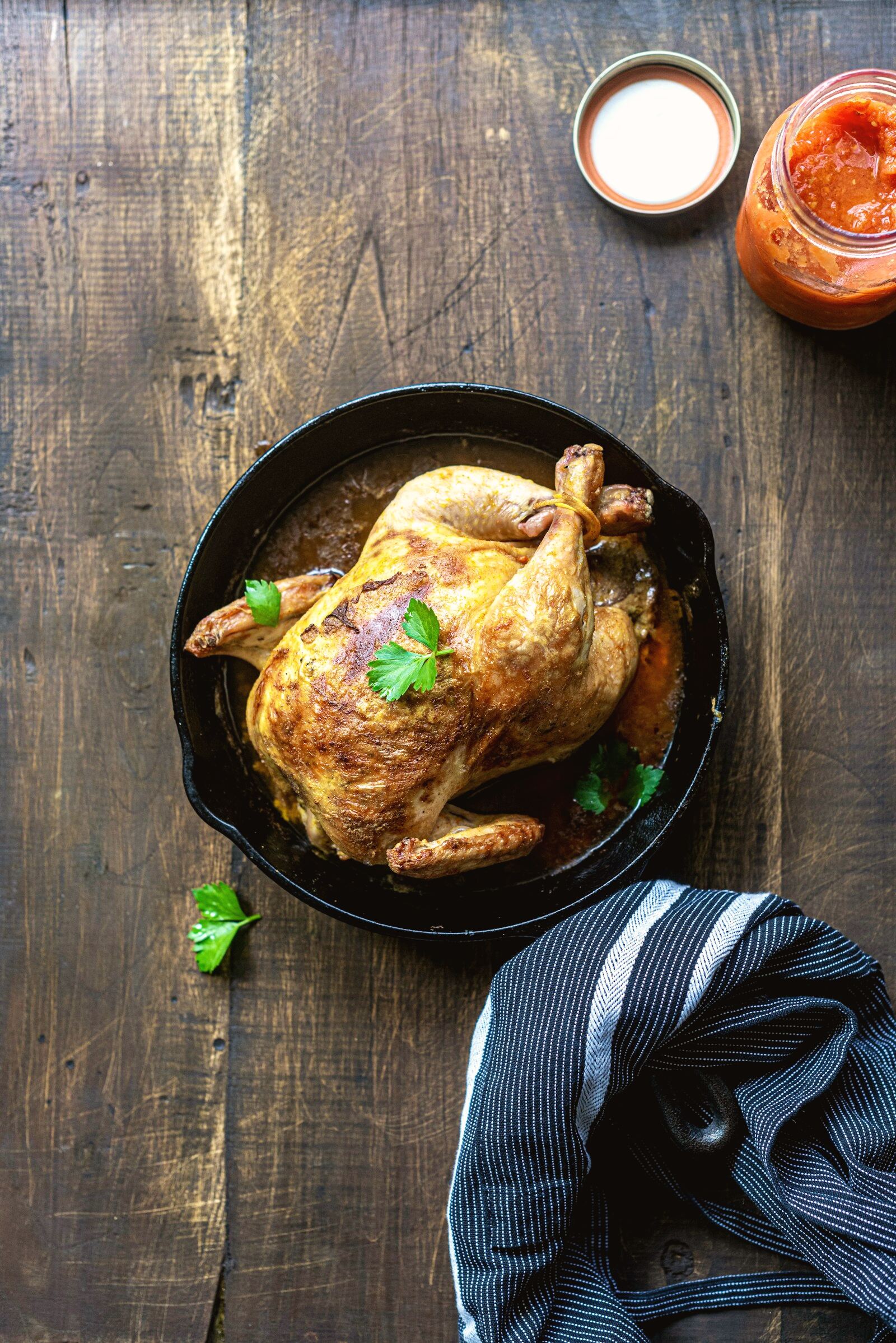
    There is an evening worth saving for the kind of week that won’t let you go. You don’t need a reservation. You don’t need to be anywhere by seven. You need a chicken, a hot oven, and the willingness to let dinner take three hours instead of forty minutes.

    The trick is to start before you think you need to. Take the bird — four to five pounds, whole — out of the fridge a full hour before it sees heat. (Cold chicken doesn’t roast, it sweats.) Pat it dry with more paper towels than feels reasonable. Then salt it generously, inside and out — about 2 teaspoons of kosher salt for a 4–5 lb bird, more on the skin than you’d think.

    Halve a lemon and tuck it into the cavity along with enough rosemary that the kitchen smells like Tuscany before the chicken is done — fresh sprigs, a small handful, stems and all, maybe four or five branches. Add four cloves of garlic, smashed but not peeled. Rub the skin with olive oil until it shines. Then send it into a 425°F oven for about an hour and ten minutes, until the thigh reads 165°F or the juice runs clear when you pierce it.

    While it cooks, do nothing useful. Pour a glass of wine. Open a window if it’s warm enough. Light a candle for the table even though it’s still light out. The smell will arrive before the bird does — that’s the point of the rosemary, that’s the point of the long approach. It’s an evening that announces itself.

    The only non-negotiable part comes when the chicken comes out: rest it for fifteen minutes before carving. Don’t skip this. This is the difference between a juicy bird and a dry one — the difference between a dinner that feels generous and one that doesn’t.

    Around the chicken, keep it simple. A bottle of Chianti — this isn’t the wine to overthink, this is the wine to drink. Bread, torn not sliced, to chase the pan juices. Arugula tossed with shaved parmesan, lemon, and good olive oil if you want something green on the table. That’s all. The bird is the point.

    Eat slowly. Pour the second glass of wine before you think you want it. Talk about something that isn’t work and isn’t logistics. If the conversation drifts to nothing, let it. Some dinners are about what gets said. This one is about what doesn’t need to be.


    FIND YOUR LOCAL EQUIVALENT

    If Tuscan isn’t your kitchen, the principle travels. The bones of this evening — a whole roasted bird, an oven that doesn’t quit, the patience to let the house fill up with smell before anyone gets to eat — work in any tradition. Thyme and lemon for something more French. Oregano and orange peel for Greek. Sage and butter for something more northern. Cumin and preserved lemon for a Moroccan turn. The aromatic changes; the slow Sunday doesn’t.

    IF YOU’D RATHER BE SERVED

    Via Carota, in the West Village, has been doing a version of this exact evening for years. A small candlelit Italian room, no reservations, no fuss. The whole roasted chicken on their menu — splayed flat with herbs over Castelfranco — captures the same intent: the bird as the point, the room as the atmosphere, the wine list as a one-page suggestion rather than an interrogation. Walk in at 5:30, or wait an hour at the bar with a Negroni. Either way you’ll come out understanding what we’re trying to make at home.