
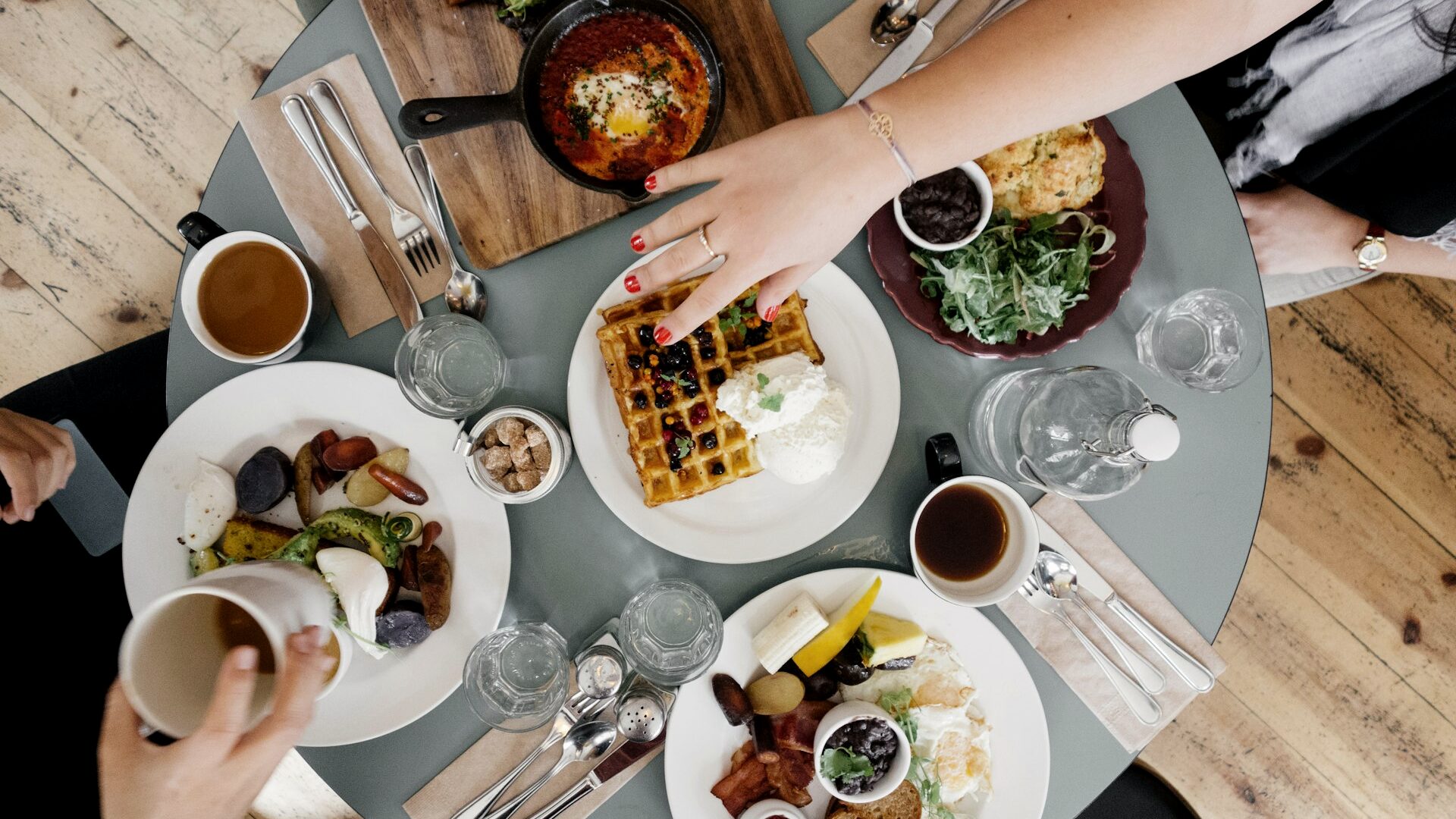
Two hours, give or take. The kind of dinner that earns its own category.
There is a particular restaurant you have been watching. Maybe you saw it mentioned somewhere and saved it without saying anything. Maybe you walked past it twice and noticed the way the room looked from the outside—low light, close tables, the kind of place that seems to know what it is. You have been waiting for the right occasion, and then one evening you realize the occasion is just the two of you, and that is enough.
Book it a week out. Not because you need to, but because the anticipation is part of it. Something to look forward to through the middle of a regular week.
Dress the way the room deserves. Not overdressed—that’s its own kind of self-consciousness—but considered. As if you looked in the mirror before you left and decided you were ready.
Arrive (five minutes early, if you can manage it). Stand at the bar while the table is finished. Order something you haven’t had before. This is the agreement you make at the door: no safe choices tonight.
The test restaurant is not about the food, though the food should be good. It’s about whether the place holds up to what you imagined, and whether you hold up to it too. New rooms ask something of you. They ask you to be present, to engage, to look at each other across a table that is not your own and find something to say that you haven’t already said.
Order the thing you can’t identify. Ask the server what they’d eat. Order two starters instead of one and share them without negotiating portions. A restaurant like this has a rhythm—let it set yours for the evening.
At some point (probably an hour in, the second glass of wine), the room will start to feel familiar. That’s the moment. That’s what you came for.
Talk about the food. Talk about the room. Talk about the thing you’ve been meaning to say for two weeks and kept putting off. A good dinner is one of the few environments that makes the second category feel natural.
Skip dessert if you want to, or split something small. Linger over coffee. There is no reason to rush a table you earned.
On the way home, decide if it goes on the list. The short list. The places you return to.
Find your local equivalent
You’re looking for a place that takes reservations, has a menu that changes, and isn’t trying to be everything. Locally-owned over chain, always. Check the reservation window—if it books more than two weeks out, that’s a signal. Read the one-star reviews for what people complained about. If the complaints are about portion size or noise level, that’s usually a good sign.
The US reference
The format shows up in every city differently: a chef-owned bistro in a neighborhood that’s still figuring itself out, a twelve-seat room above a bar, a place that’s been there twenty years and doesn’t need to advertise. OpenTable and Resy will show you what’s booking. The ones with a two-week wait and no photos on their own website are usually worth the patience.
Leave a Reply