
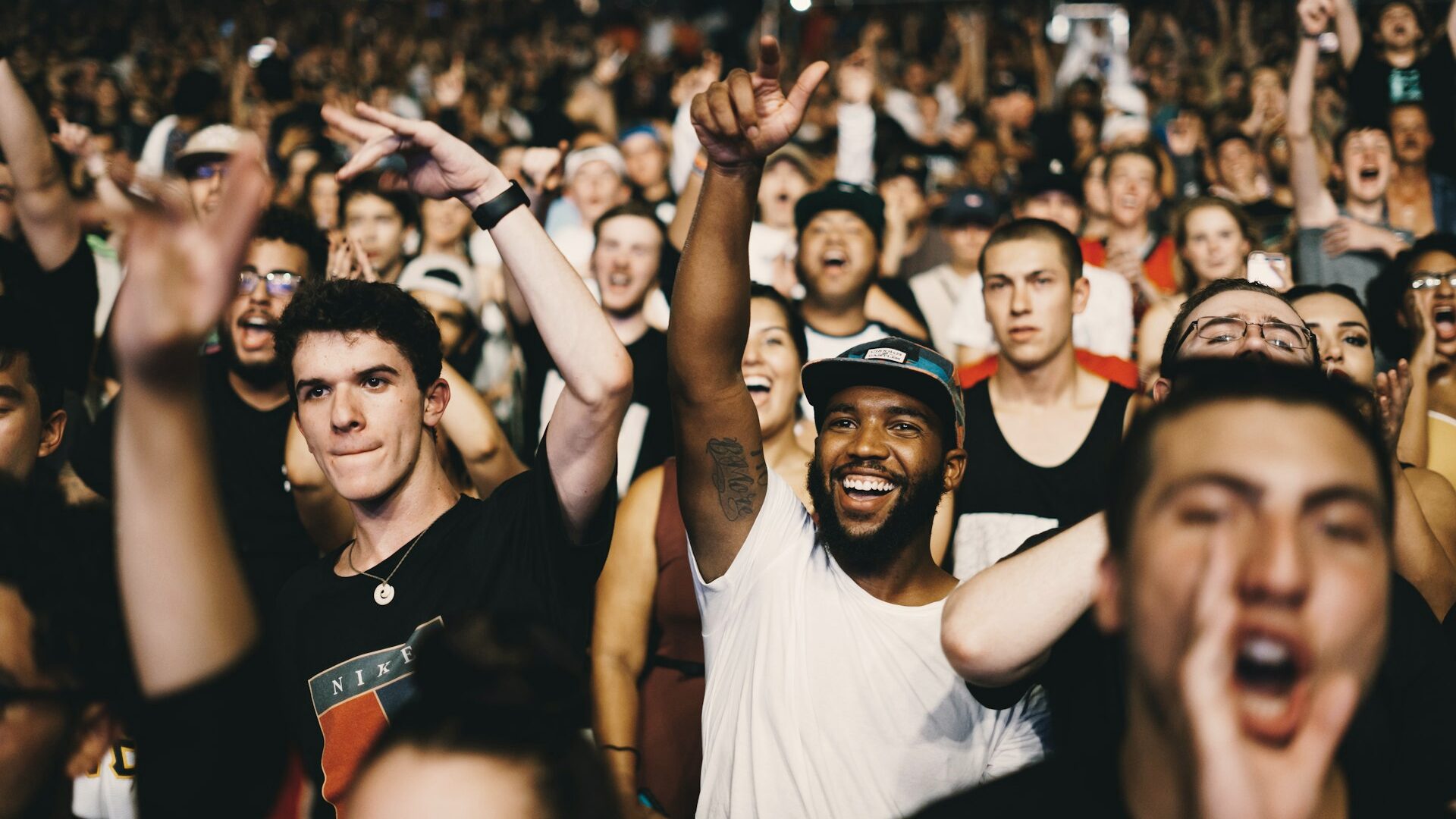
Two to three hours out. The show itself is two hours. The walk back is the best part.
You buy the tickets because the price is low enough that saying no would feel like a choice you’d regret. You don’t know the artist well. Maybe you heard one song and saved it. Maybe someone mentioned the name once. The ticket says small venue and the map shows a neighborhood you’ve been meaning to get to and that’s enough.
This is the concert you almost skip. The one where, by the time Friday arrives, the couch is making a reasonable argument. Go anyway. The couch will be there Sunday.
Arrive about thirty minutes early. Not because you need to, but because small venues reveal themselves in the first thirty minutes before a show in a way they don’t afterward. The room at half capacity. The light check still happening. The people who showed up early because they actually know the music. Stand at the bar and watch the room fill in. Drink something. Get your bearings.
A small venue asks something different of you than an arena. You’re close enough to watch the artist’s hands. Close enough that eye contact is possible. The sound hits you differently at this distance—not just through the PA but through the room, through the floor, through the person standing next to you. It’s physical in a way that scales don’t replicate.
You don’t need to know all the songs. Not knowing them is its own kind of freedom. No waiting for the hits. No comparing this performance to a recorded one you have memorized. Just the music as it’s happening, landing without context, which is sometimes exactly how music is supposed to land.
Somewhere in the second half of the set—after you’ve adjusted to the room, after you’ve found your footing in the music—it’ll click. The thing that made someone record this and put it in the world will become audible. That moment is why you went.
Walk after. Not to the car immediately. Around the block, through wherever you are, still inside what you just heard. The walk back from a concert has its own quality—your ears are still ringing slightly, the night has a particular texture, you’re both in the same place emotionally in a way that’s hard to engineer otherwise.
Talk about what you heard. Order food somewhere you wouldn’t normally go at this hour. The evening isn’t over yet.
Find your local equivalent
Bandcamp’s event listings, Songkick, and Resident Advisor are the best sources for small venue shows in any market. Look for venues with capacities under 500—listening rooms, art spaces, converted bars with a back room stage. Tickets in the $15–35 range usually indicate the format. The artist doesn’t need to be famous. The room just needs to be right.
On not overthinking the pick
A lot of good concert nights start with a genre that isn’t your first choice. Jazz when you usually don’t, folk when you usually don’t, a genre you last listened to seriously in a different decade. The unfamiliarity is a feature. It removes the part of you that’s evaluating and leaves the part that’s just listening. That’s the version of yourself worth bringing to a small room on a weeknight.
From The Scene → Stop Making Sense
More from Date Night
Leave a Reply