
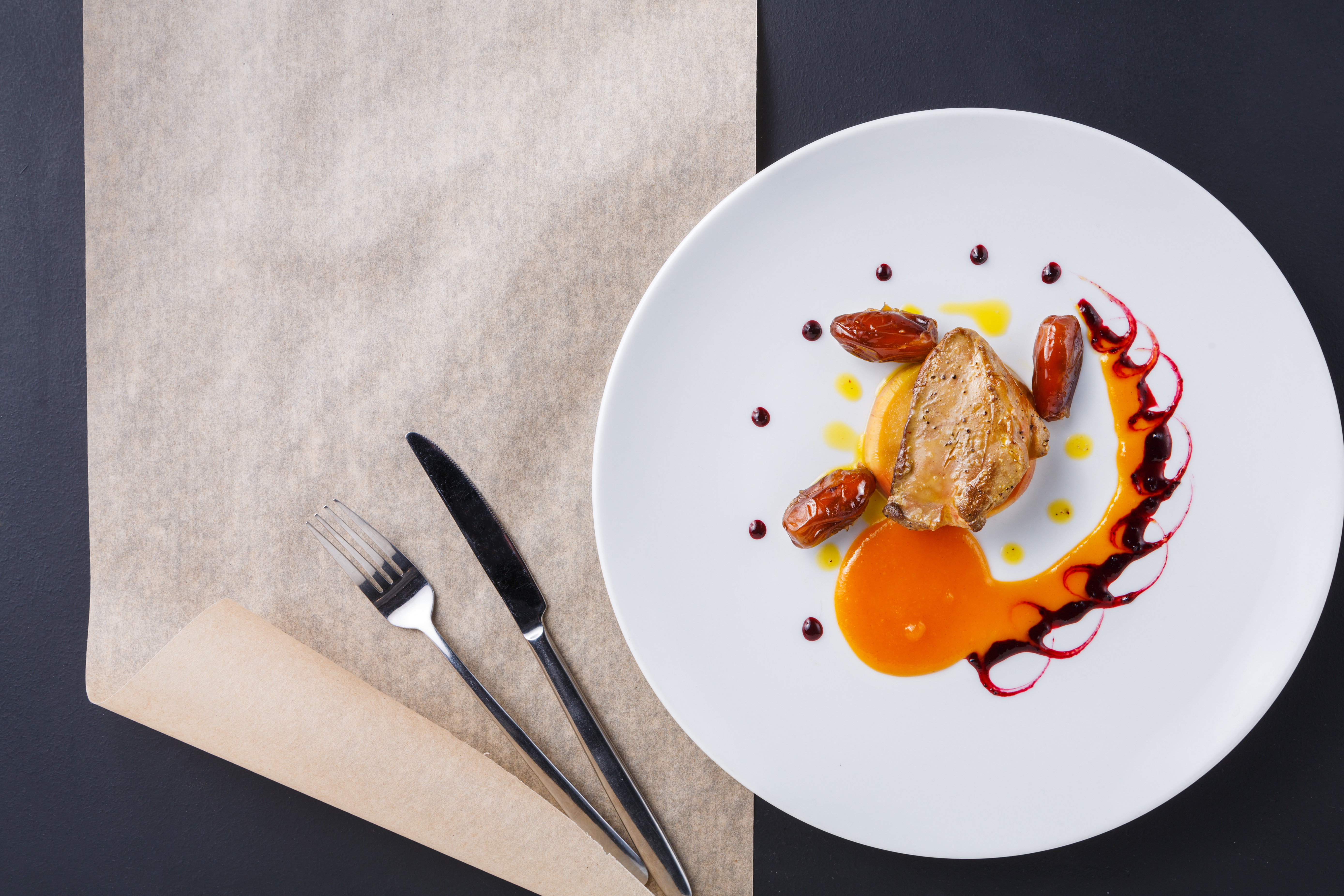
Shape: five small courses, served slowly, over two to three hours. Best for a night with nowhere to be afterward.
The point of a tasting menu is not the food, exactly. It is the pacing — the way a meal stretched into courses turns an evening into an event, each small plate a reason to stay at the table a little longer. You can do this at home for the price of a good grocery run and a willingness to cook in stages.
Keep the portions deliberately small. A tasting menu lives or dies on restraint: two or three bites per course, plated on your smallest dishes, so that hunger never quite resolves and conversation has room to wander between them. Five courses sounds ambitious until you realize three of them can be assembled rather than cooked — a few oysters, a wedge of cheese with honey, a single perfect fig.
Build an arc. Something bright and cold to start, then something rich, then a palate-cleanser that is really just an excuse to leave the table and come back. Save one course you actually have to cook for the middle, when you are both a glass of wine in and the kitchen feels like the best room in the house.
The trick is to plate one course at a time and clear it before the next, even if clearing means two steps to the sink. The walking, the waiting, the small ceremony of the next plate arriving — that is the date. The food is just what gives your hands something to do while you pay attention to each other.
Make It Yours
No need for anything imported or rare. A tasting menu is a frame, not a recipe — five things you both like, made small and served slow. Look to what is good at your local market this week and let the season write the menu.
More from Date Night
Leave a Reply